Drums Recording
 5 min read
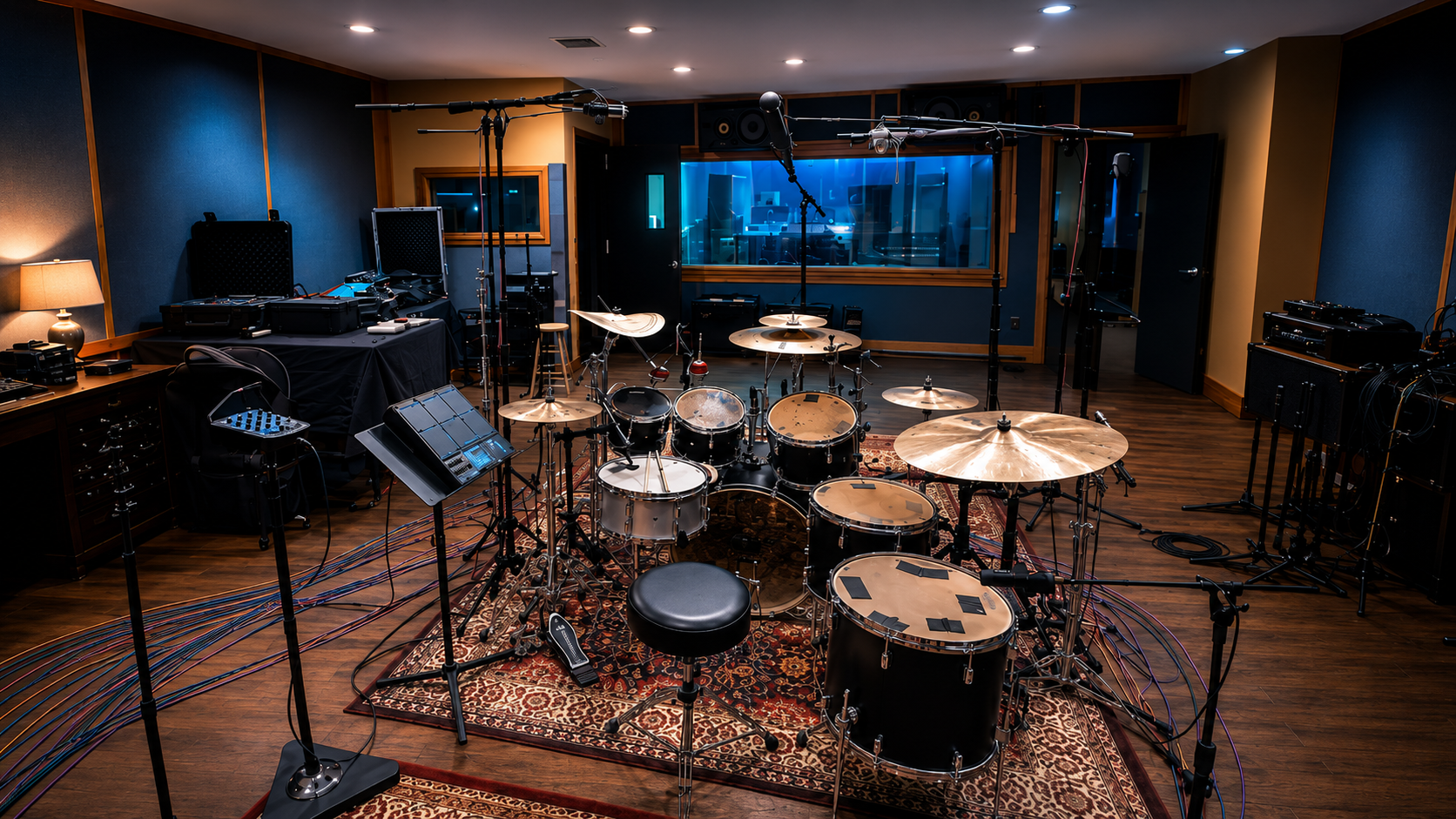
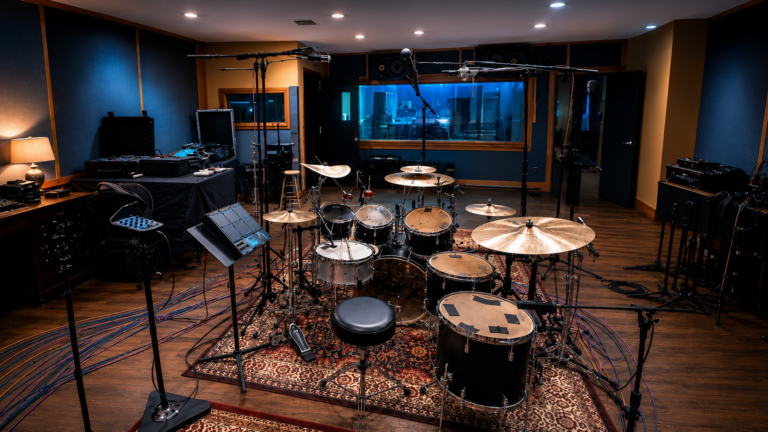
Usually, when recording drums, I use 10–13 microphones across the entire kit, of which 8–9 typically remain in the final recording.
However, the microphones and their positions are only a small part of getting a good drum recording.
- The most important thing – as with any instrument – is the musician.
If they play too softly or too hard, with poor timing and inconsistent dynamics, no amount of processing or take editing will produce a truly good result.
Even strong musicians who are not used to studio conditions can become disoriented by a poor cue mix in their headphones. This can make them lose control of their dynamics and timing, while still being afraid to say that they cannot hear themselves, the click, prelays, and so on.
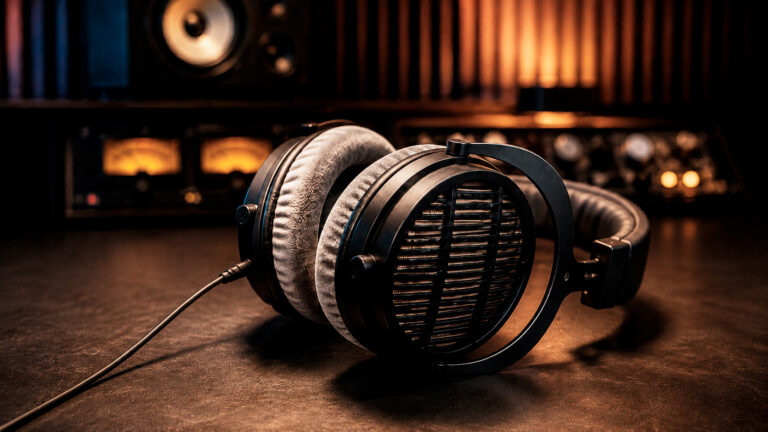
It is especially useful to check the artists’ cue mixes on multichannel systems that allow musicians to adjust their own headphone balance, such as Aviom or Hear Back.
Especially Hear Back. When I was at Berklee, we spent a long time dealing with random issues on those units, both over analog and Dante. Sometimes one channel would reach everyone except one specific line. The musician might not even realize that they have been missing one instrument throughout the entire session.
- The instrument itself is also extremely important.
Drummers usually bring their own kits, and you might assume they already know what works. Still, it is better to ask in advance what kind of kit they are bringing, what the drum sizes are, and when the heads were last changed. In many pop-rock styles, it is simply impossible to achieve the desired kick sound with a drum smaller than 20 inches.
Recently, I recorded drums for one of the songs I am producing five separate times before I found both the right drummer and the right drum kit. Sometimes that is just how it goes 🤷♂️
A good practice is to think about each individual song and tune the drums accordingly. They do not necessarily need to be tuned to the key of the song, but when recording an album, small tuning adjustments between tracks are often necessary.
It is also useful to listen to different cymbals. Usually, the perspective from the control room is more critical in this regard and gives you a much better idea of how the instrument will actually sit in the mix.
- The room and the position of the instrument within it.
Usually, if you take a snare drum and walk around the room while hitting it, you can get a rough idea of how the room responds in different positions. Ideally, you would have the drummer play kick, snare, and hi-hat in several different spots 🙄
In practice, however, the most important aspects of the room are usually the ceiling height and how close the kit is to reflective surfaces. The higher the ceiling, the less harsh and unpleasant the cymbals tend to sound. The fewer strange early reflections there are around the kit, the tighter and more defined the hits will feel.
The most luxurious drum recordings I have made were in hangar-like studios with five-meter ceilings and a noticeable but controlled reverb tail.
I was recently at Patchwerk Studios in Atlanta. They have an interesting drum booth with a ten-meter ceiling and acoustic treatment only on the lower section of the walls. Because of that, the close microphones capture a mostly dry drum signal, but if you raise microphones two or three meters into the air, you can get something close to real Capitol Chambers live in the room.
- Finally, the microphones.
When I was at Warner Bros., the total value of the microphones set up around the drum kit was approximately $60,000.
Did the drums suddenly sound much better? Lol – I do not think so.
Microphones are really more like choosing a palette and a set of colors for a recording. There are no universally good or bad options. Some sound bright, some dark, some clean, some distorted, some fast, and some slow. The engineer’s job is to choose the ones that best suit the specific song.
Even the choice between large- and small-diaphragm capsules for overheads creates a huge difference in how the instrument is perceived. And what about trying Blumlein with ribbons, or an M/S configuration?
There are endless possibilities. Very often, the microphone position and type affect the result far more than the price or reputation of the microphone itself.
One Grammy-winning engineer once told me that his favorite overhead pair is actually a pair of Beyerdynamic M201s 😑
And, of course, there is the well-known story about the drums on “Rehab” being recorded with a single SM57.
At Berklee, where I studied, there is even an entire class called “Recording Drums.”
I did not take it because I did not see much value in it for myself.
Still, it is funny that there is a course that spends an entire semester on the recording techniques of a single instrument.