Do DAWs sound different?
 2 min read
A Great Professional ≠ a Great Teacher
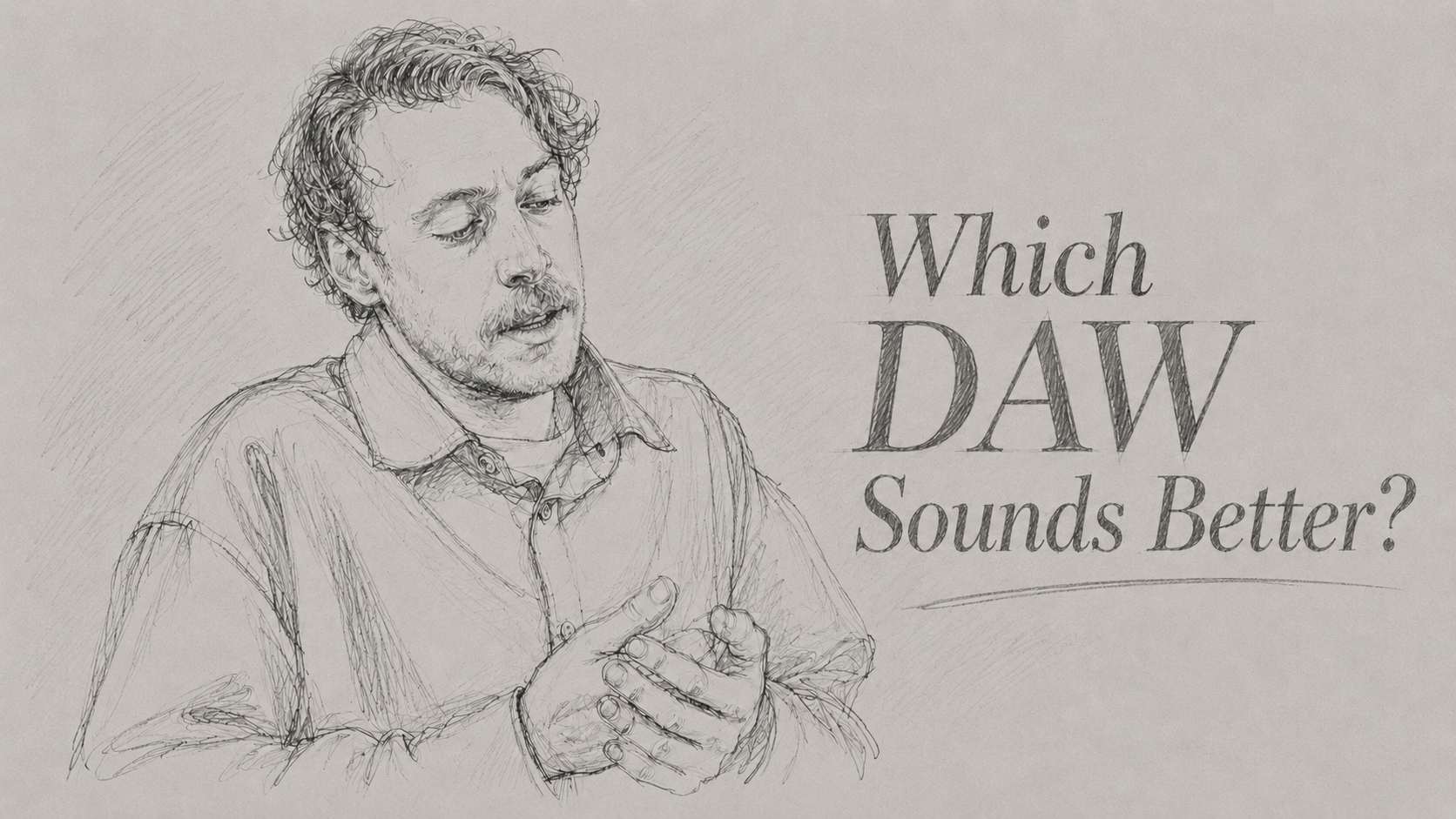
I was genuinely amused by a recent short from Jon Castelli on the Mix With The Masters page, where Jon seriously discusses the differences between DAWs and the supposed “analog character” of how they sound.
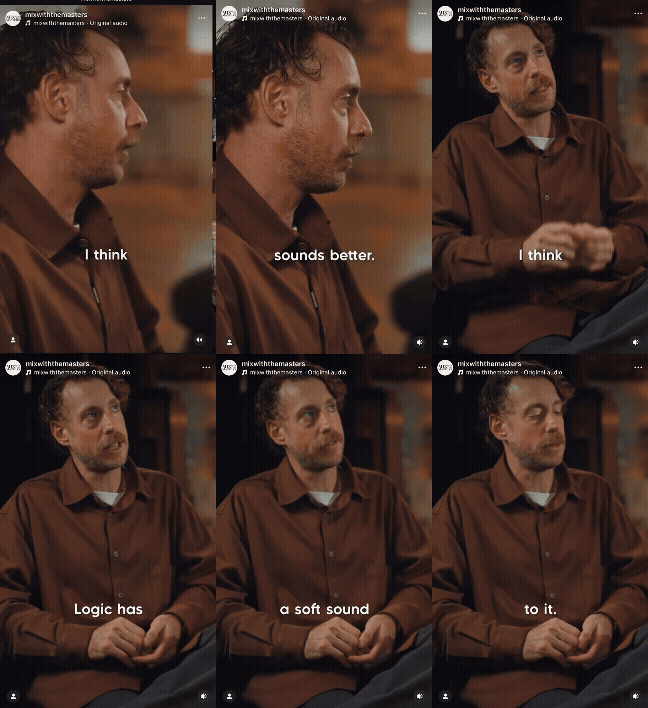
It would be easy to say, “What the hell is he talking about?” After all, modern DAWs operate in 64-bit or 32-bit floating point, and most of his arguments can be disproven with a basic null test.
But then again, this is a mixing engineer with seven Grammy nominations, including Billie Eilish’s latest album – which, for me, is an absolute sonic reference – along with many other projects of the highest level. 🤔 Hmm. Maybe DAWs really do sound different. Surely an engineer of that caliber cannot be wrong.
Actually, they absolutely can.
The modern music production industry is only around 70–80 years old, and its technology has changed radically almost every decade.
At this point, there simply has not been enough time for a stable and consistent school of mixing, mastering, and related disciplines to develop.
Most modern AAA engineers are self-taught. Many began their careers delivering coffee in recording studios – just as people still do today, by the way, but that is a topic for another post.
Professionals like Jon may have taught themselves how to hear and feel music at an exceptional level while still not fully understanding – or simply not yet having learned – the technical processes behind their own decisions.
Because of that, differences in pan law, nonlinear modulation plug-ins, resampling algorithms, and other technical details may be perceived as differences in the sound of the DAWs themselves.
That is why you should not treat everything said online by even the most respected professionals as unquestionable truth.
It is much more useful to investigate the subject yourself and understand how they arrived at their conclusions.
On this topic, I highly recommend Dan Worrall’s YouTube channel. It is an excellent educational resource where every video is more than just an empty statement – Dan investigates the problem, demonstrates what is actually happening, and proposes practical solutions.
P.S.
I have formally studied audio engineering in several places, and I have genuinely encountered more than one instructor who talked about the “analog sound” of different DAWs 🥲 Fortunately, that never happened at Berklee.